🌿 THE GOOD AI
The best reading tutor in Nigeria doesn't need the internet
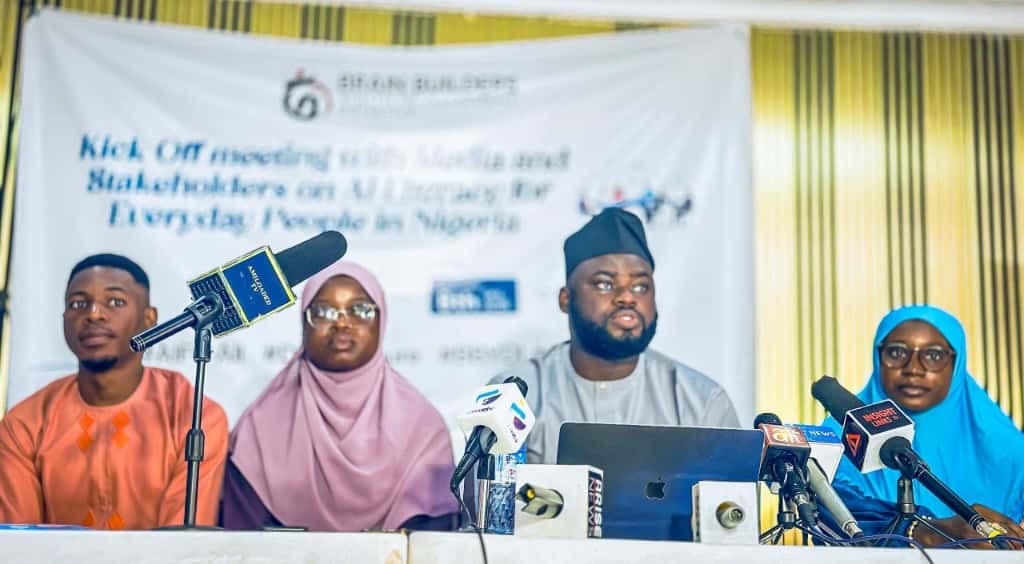
In Nigeria, seven in ten students cannot read with comprehension. Many of their classrooms have no internet, patchy electricity, and one teacher for far too many children. So Rising Hope Girls Educational Foundation, a Nigerian NGO, built an AI reading tutor designed for exactly that reality. ReadBuddy uses speech recognition and natural language processing to listen to a child read aloud, spot where fluency breaks down, and coach them through it. It works entirely offline.
This week it won the top humanitarian prize at the UN's AI for Good Impact Awards in Geneva. The numbers behind the award are the real story: after six weeks of use, participating students' reading accuracy rose from 58% to 83%, a 25-point jump. The platform has already reached more than 7,000 children and 1,000 instructors, and a 2026 to 2027 expansion backed by the Ford Foundation, AWS, and Team4Tech aims to reach 40,000 learners.
Most education AI assumes bandwidth, devices, and English. ReadBuddy assumes none of that. It was built in Nigeria, for Nigerian classrooms, in the conditions Nigerian students actually face. It was measured where the tool lives, which is what makes the accuracy gain credible.
That said, six weeks is a short window, and 7,000 students is early days. The expansion to 40,000 will test whether the results hold at scale, and whether the offline-first model survives as the curriculum grows. Award momentum helps. Sustained funding decides.
⚡ 3 GOOD SIGNALS
A faster path to magnets that don't need rare earths
Researchers at the Department of Energy's Ames National Laboratory built DuctGPT, an AI trained on physics rather than just existing data, to hunt for permanent magnets that need no rare-earth elements. Supply chains for those minerals are concentrated and fragile, so a faster route to alternatives matters for EVs, wind turbines, and the whole clean energy build-out.
Source: Ames National Laboratory
The UN wants every nation to sign a child safety pledge for AI
At the first UN forum where all 193 member states had a guaranteed seat on AI governance, Secretary-General Guterres called for an AI Child Safety Pledge: no AI deployed to children without child-specific safety testing, zero tolerance for AI-generated abuse material, and mandatory human escalation when a child shows distress. His line: "the answer must never be 'the algorithm did it.’”
Source: Forbes
DeepMind's frontier models are heading to Accra
Google is opening Africa's first Applied AI Lab at the Accra AI Community Centre in Ghana, giving African founders early access to DeepMind models plus mentorship, commercialisation support, and potential funding. Applications run through August 31. Google says it has now exceeded its $1 billion Africa investment goal. The stated ambition: the continent's first AI-native unicorns.
Source: Google Labs
🔬 THE DEEPER DIVE
Every new car in Europe now watches the road with you
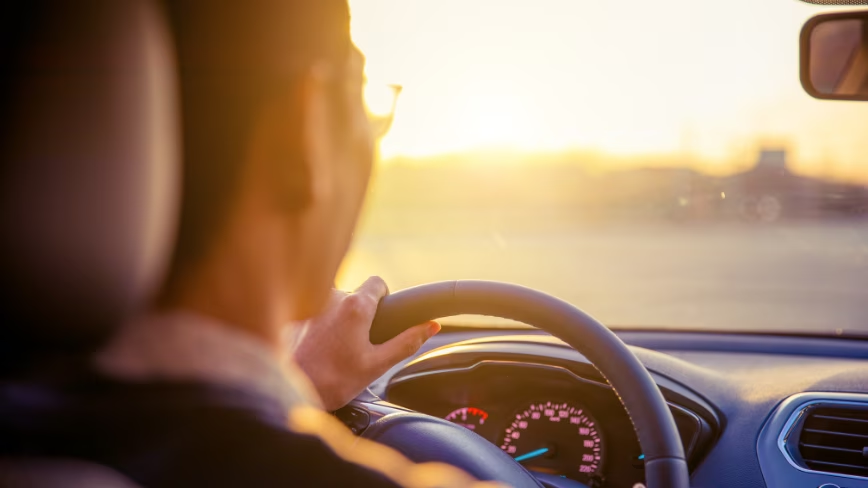
As of July 7, every new car, truck, and bus sold in the European Union must ship with an Advanced Driver Distraction Warning system. AI-powered sensors track the driver's gaze and head position, and if attention leaves the road for more than 3.5 seconds at speeds above 50 km/h, the car speaks up. There is no opt-out for manufacturers: no compliant system, no market access. It is the second phase of the EU's General Safety Regulation and part of Vision Zero, the bloc's plan to approach zero road deaths by 2050.
The design detail that deserves the most attention is privacy. The mandate requires the gaze analysis to run locally, inside the vehicle, without recording or transmitting footage. The car watches, decides, warns, and forgets.
Our PM and Risk lens
Regulation is the most underrated distribution channel in tech. One rule just deployed driver-monitoring AI across one of the largest car markets on earth, no growth team required. The constraint set is also a masterclass in requirements writing: on-device inference, no data retention, a hard behavioural trigger, an alert rather than an intervention. Products built to constraints like these tend to come out better than products built to maximise data capture. The open product question is the alert experience itself. If warnings feel naggy or fire on false positives, drivers will tune them out, and a safety feature people ignore is a compliance checkbox, not a safety feature.
Three things are worth watching. First, alert fatigue and gaming: drivers who find the system annoying will find workarounds, and a safety system people actively defeat can be worse than none. Second, scope creep: today the rule says analyse locally and record nothing, but insurers and fleet operators will want that data, and pressure to log "just a little" will be constant. The privacy design holds only as long as regulators keep holding it. Third, liability: when a distracted driver crashes and the system did not warn, or warned and was ignored, who answers? Type-approval standards will be tested in court before they are tested in crash statistics.
The next 12 to 24 months
Watch for the Brussels effect. Automakers rarely build region-specific hardware, so driver monitoring will quietly become standard in cars sold far beyond Europe. Watch insurers experiment with pricing around attentive driving. And watch the only number that counts: whether EU road deaths, roughly 20,000 a year, actually bend downward. That figure, not the mandate, is the story we hope to write in 2028.

🛠 TOOL OF THE WEEK
Happywhale
Upload a photo of a whale's tail and Happywhale's computer vision will tell you, in seconds, which individual whale you just met, matching fluke patterns the way face recognition matches faces. What began as a way to engage whale watchers is now serious science: 1.5 million photos from 53,000 contributors across 100+ countries, more than 120,000 individual whales and dolphins identified, and data cited in 40+ peer-reviewed studies. It just won the AI for Planet award after its ship-strike evidence helped create a 40,000 km² slow-navigation zone off the Antarctic Peninsula. If you have ever photographed a whale, you are holding research data.
→ Read more: AI for Good
💬 ONE QUESTION
Your new car watches you for your own good, then forgets what it saw. That trade feels different depending on who is watching and why.
Where is the line between AI that protects you and AI that surveils you?
Hit reply. We read every response.