Know someone who's uneasy about AI? Forward them this. It might be the calmest thing they read this week.
🌿 THE GOOD AI
AI doubled forecast accuracy in the hardest window, two to six weeks out
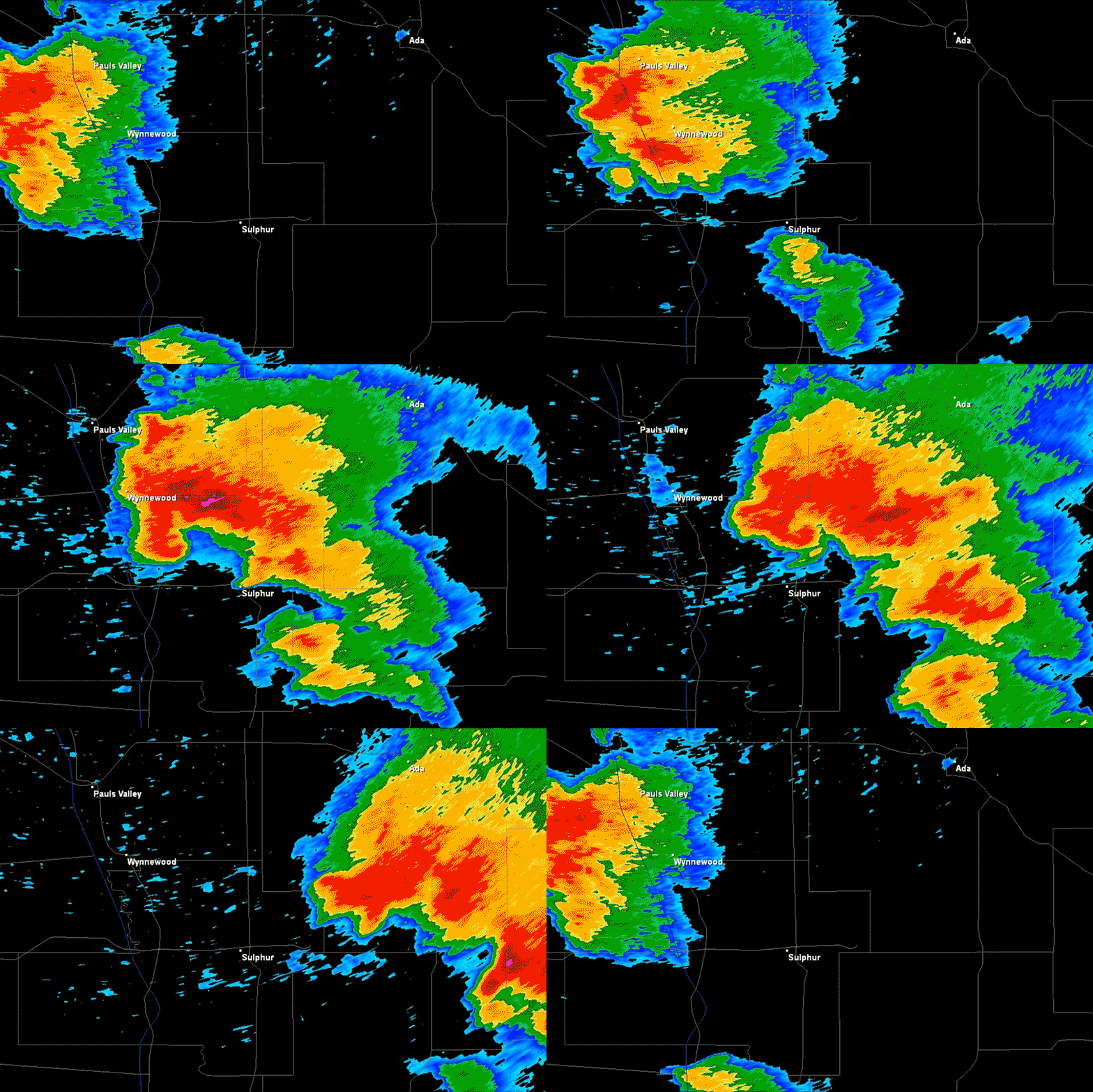
Weather forecasts are good for a few days and shaky after that. The stretch between two and six weeks out has been the stubborn gap, too far for weather models, too near for climate averages. This week a team from MIT, Harvard, Microsoft, the European Centre for Medium-Range Weather Forecasts (ECMWF) and others published a paper in Nature describing a machine-learning layer that learns a forecasting system's past mistakes and corrects them.
Applied to ECMWF's model, MIT News says it doubled forecasting accuracy in that window, and the team's entry placed first in an international competition run by ECMWF. Coverage quoted by MIT says it improved the physics-based model on 98% of precipitation targets and 92% of temperature targets, and it showed a statistically significant gain on extreme weather, where older bias corrections tended to make things worse. It works as an add-on to any model, and the researchers describe it as open source and low cost.
Why it matters: this is the window where energy operators, farmers and emergency managers most want warning. Kenya's meteorological office has reportedly approached the team about using it for monsoon season forecasts.
What we are still uncertain about: the release does not spell out the metric behind "doubled," the competition covered one season, and beating long-run climate averages is a modest bar. The Kenya conversation is exploratory, not a deployment. Good news, with the footnotes left in.
⚡ 3 GOOD SIGNALS
AI is learning the language cells use to talk to each other
MIT researchers built IRIS, a neural network that reads a cell's gene activity to work out which signalling pathways it received, even in cell types it has not seen. It predicted that activating one pathway would promote lung development, and mouse experiments supported that. Lab and mouse only so far, but it could help build better organoids for testing drugs.
Source: MIT News
$50 million to put AI to work for city residents
The Rockefeller and OpenAI foundations launched Cities Deliver, with grants of $500,000 to $2 million for nonprofits working with city governments on health, economic mobility and resilience. Planned follow-ons include Rio's AI flood alerts. The goal of reaching 100 million residents is an aim, not a result. Applications close November 29.
Source: The Rockefeller Foundation
Teachers who use AI say it gives time back for students
In a Gallup and Walton Family Foundation survey of more than 1,900 educators, nearly two-thirds of those using AI said it freed time for the parts of the job they value most, like working with students. It is self-reported, and an earlier survey found most teachers had no guidance on using it.
Source: K-12 Dive
🔬 THE DEEPER DIVE
Letting outsiders inside the lab
On October 15, Anthropic said six staff from the nonprofit evaluator METR now work inside the company with employee-like access: company laptops, office space and internal tools roughly on par with Anthropic's own risk teams. METR will publish its analysis of Anthropic's risk levels, incidents and practices. Anthropic cannot veto publication, but it can require redaction in predefined categories, including customer data, privileged legal material and model architecture details, and it decides what falls into them. METR can say publicly whether it thinks a redaction was justified.
This is the top of a three-tier model. In the lowest tier, evaluators run narrow investigations and need Anthropic's approval to publish. SecureBio is reviewing the chemical and biological weapons chapter of Anthropic's August risk report, and Accenture and Faculty are working toward a broader partnership. Regular readers will remember we covered the Accenture commitment, and last week's decision to cut live internet access from internal evaluations. This is the next step in the same story: not just fixing problems, but letting someone else check.
Our PM + Risk Manager lens
From the product manager's chair, this is a design problem more than a policy one. Who sees what, who can say what, and what happens at the edges are product decisions, and a tiered model is a sensible way to scale: not every reviewer needs the same access, and the strongest feature here is the right to publish with a visible redaction. If you were measuring whether it works, you would watch two things: whether METR actually publishes, and how often the redaction right gets used.
From the risk manager's chair, this resembles an examiner embedded in a regulated firm, an analogy Anthropic itself calls imperfect. The controls that matter are independence and escalation. Here the arrangement is voluntary, company-designed, and Anthropic defines the redaction categories. Enforceable agreements and a siloed team are good signs. The real test is the first uncomfortable finding, and whether it reaches the public with the redaction disputes intact.
The next 12 to 24 months
Nothing has been published yet, so this is a promise, not a result. Over the next year or two, watch for METR's first public report, whether other labs offer comparable access, and whether tiered evaluation hardens into a norm or a rule. If it does, outside checking of frontier AI starts to look like financial audit: routine, boring and trusted. If it does not, this will have been a good-looking arrangement that never produced a hard finding. We are cautiously hopeful, and watching for the first report.
Source: Anthropic
🛠 TOOL OF THE WEEK
Gemini Live Guided Vision
Share your phone camera in Gemini Live and it describes what it sees, answers follow-up questions, and tells you how to reframe the shot: read a nutrition label, find a dial on an appliance, check what colour a shirt is. Google built it with the visual-interpreting service Aira and more than 1,000 of its trusted testers. It works on Android 9 and later where Gemini Live is supported. Google says it is not a mobility aid or a white cane replacement.
→ Read more: Google
💬 ONE QUESTION
If you had a trustworthy weather forecast five weeks out, what would you plan differently, at work or at home?
Hit reply. We read every response.
Follow us on Instagram @the.goodai