🌿 THE GOOD AI
The brain-like chip that could slash AI's energy footprint by 70%
The single loudest, most legitimate criticism of AI right now is its energy appetite. Data centres are straining electricity grids, models keep getting bigger, and the carbon math is genuinely difficult to wave away. On April 22, researchers at the University of Cambridge published a result in Science Advances that takes that criticism seriously and offers a credible, peer-reviewed path forward.
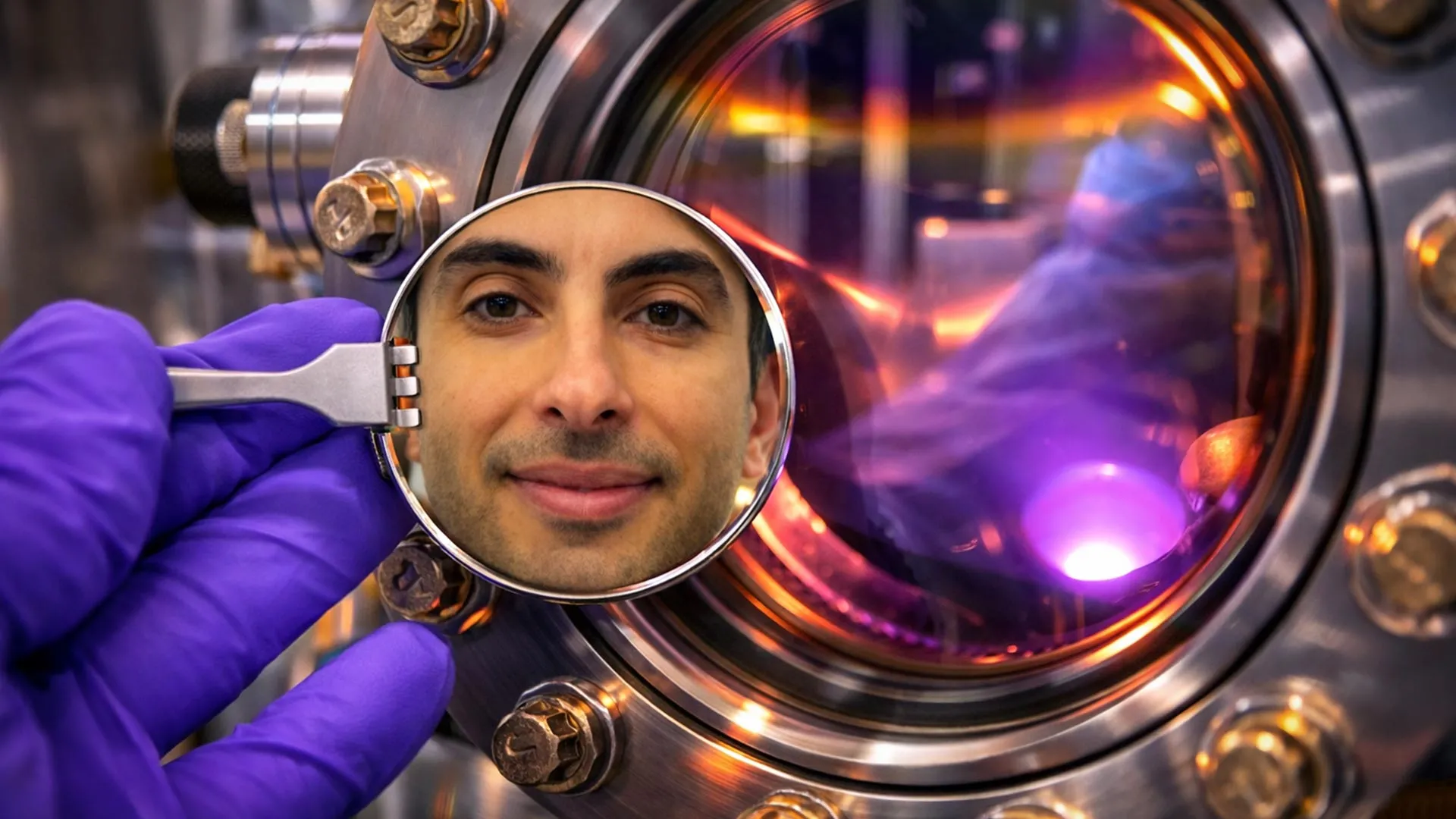
Their nanoelectronic device, made from modified hafnium oxide, mimics the way biological neurons work: instead of shuttling data back and forth between a processor and separate memory, it processes and stores information in the same place. This "in-memory computing" architecture is what drives the efficiency gains. The device achieves switching currents a million times lower than conventional oxide-based chips and can hold hundreds of distinct, stable conductance levels, the key technical requirement for analogue computing at this scale.
If the technology scales to production, the researchers estimate it could cut AI hardware energy use by up to 70%. That number matters not just for hyperscale data centres. It matters for on-device AI in settings where grid access is limited or expensive. Healthcare diagnostics in rural clinics, climate monitoring in remote regions, agricultural tools in the Global South: these are applications that become meaningfully more feasible when the energy cost of running a model drops by that magnitude.
What we are still uncertain about: this is lab-bench science. The gap between a proof-of-concept device and a chip you can manufacture at a commercial scale is real, and it is measured in years. The team has not yet demonstrated performance across a full AI inference or training task. The materials science is credible, and the publication record is peer-reviewed, but real-world deployment is a separate challenge from a materials breakthrough. Still, this is what the early stage of a genuinely important shift looks like.
⚡ 3 GOOD SIGNALS
⚡AI-discovered drugs are clearing Phase I at twice the industry average
A BioSpace analysis of the current global pipeline found that AI-native drug compounds are achieving 80 to 90% Phase I clinical success rates, compared to the industry average of 40 to 65%. As of early 2026, 173 AI-discovered programs are in clinical development, with 15 to 20 expected to enter pivotal Phase III trials this year. The data has moved past proof of concept. This is a pipeline story now, not a press release story.
Source: BioSpace
🤝 The EU just put €63.2 million into public AI for health and online safety
On April 21, the European Commission opened seven Digital Europe Programme funding calls worth €63.2 million, targeting AI-powered medical image screening in hospitals, advanced digital skills training, and research on online information integrity. Applications close October 1. This is a rare example of a government directing public money specifically at AI that is designed to serve public health and civic safety rather than private profit.
Source: European Commission
🌱 Sony's AI robot beat a professional table tennis player. The real story is what comes next
On April 23, Sony AI published research in Nature showing that its autonomous robot Ace defeated professional players under official ITTF regulations, the first robot to achieve expert-level play in a competitive physical sport. The technology behind it: event-based vision, real-time reinforcement learning, and a system that reacts in genuinely unpredictable conditions. The applications that follow from reliable physical AI aren't in sport. They are in surgery, eldercare, manufacturing, and disaster response.
Source: Nature
🔬 THE DEEPER DIVE
66 million Americans are consulting AI for health guidance. Most are using it to get to their doctor, not to skip one.
A major Gallup/West Health survey released April 15 found that one in four Americans, 66 million people, have used an AI chatbot for health information or advice. The number alone is striking. What the data shows underneath it is more useful.
Forty-six percent of users said AI made them feel more confident talking to their doctor. Twenty-two percent said it helped them identify health issues earlier. Nineteen percent said it helped them avoid unnecessary tests. The dominant use pattern is supplementary: people using AI to prepare for care, understand results, and ask questions they were not sure how to phrase. Most are not bypassing the medical system. They are trying to navigate it better.
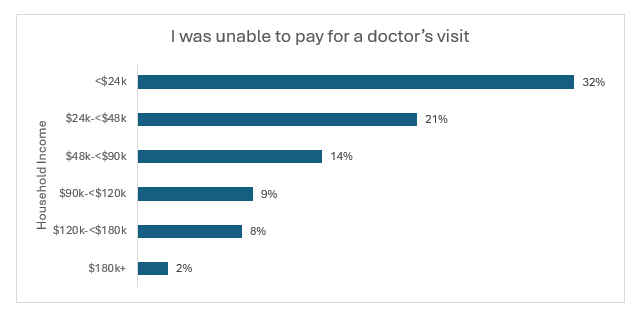
The equity dimension is harder to ignore. Fourteen percent of AI health users turned to it because they could not afford a doctor. Sixteen percent turned to it because they could not access a provider. For tens of millions of people, AI has become a de facto safety net for the gap between what the healthcare system should provide and what it actually delivers.
What the survey does not capture
The Gallup data tells us what people say AI is doing for them. It does not tell us whether the guidance they received was accurate, appropriate, or safe. Response confidence and clinical accuracy are different things, and a user who feels more prepared for a doctor's visit is not the same as a user who received good health information.
The PM lens
For anyone building health-adjacent AI products, this data reframes the design problem. The 66 million figure represents a population that is already using AI for health decisions, largely without formal product design having shaped that behaviour. The question is not whether people will consult AI for health guidance. They already are. The question is whether the products they reach for are designed to hand them off to appropriate care, surface what they do not know, and flag when a question is beyond what a language model should answer. The access finding — 30% of users are reaching for AI because care is unaffordable or unavailable — is both a product opportunity and an ethical obligation. Designing for that user is different from designing for a curious, insured professional.
The risk lens
The confidence effect is the risk lens priority. A user who feels more confident after an AI health interaction may have received genuinely useful context. Or they may have received a fluent, plausible answer that reinforced a misunderstanding. Language models produce confident-sounding output regardless of accuracy. In health contexts, that characteristic is not neutral. The populations most likely to use AI as a care substitute, lower-income users, those in provider-shortage areas, are also the populations least likely to have a backup layer of clinical oversight. The downside scenario is not that AI replaces doctors for well-resourced users. It is that it becomes a confidence mechanism for under-resourced users who need actual care.
The next 12 to 24 months
Expect more surveys like this one, and expect regulators to start asking harder questions about what "health guidance" means when it comes from an AI system. The optimistic trajectory is that health AI products are designed around the real use pattern the Gallup data reveals: supplementary, access-bridging, and explicitly oriented toward getting people to care rather than away from it. The 66 million figure is large enough now that the design choices made in the next two years will have consequences at population scale.
🛠 TOOL OF THE WEEK
Pharma.AI Insilico Medicine's end-to-end AI drug discovery platform
Pharma.AI is the platform that has been running quietly behind two of this week's biggest health stories: the AI drug pipeline now showing 80 to 90% Phase I success rates, and the formation of the industry's first Longevity Board to govern AI-driven aging research. Insilico Medicine's platform integrates disease target identification, molecular generation, and clinical candidate selection into a single AI-driven pipeline. It is the first to take a drug from end-to-end AI discovery through to completed Phase IIa trial results. Not a consumer tool — but if you want to understand what the future of pharmaceutical R&D actually looks like in practice, this is the platform that has done it.
→ Read more: Insilico Medicine
💬 ONE QUESTION
66 million Americans are using AI to navigate their health. If you have ever turned to AI with a health question, what made you reach for it instead of, or before, calling a doctor?
Hit reply. We read every response.